Wednesday, May 22, 2013

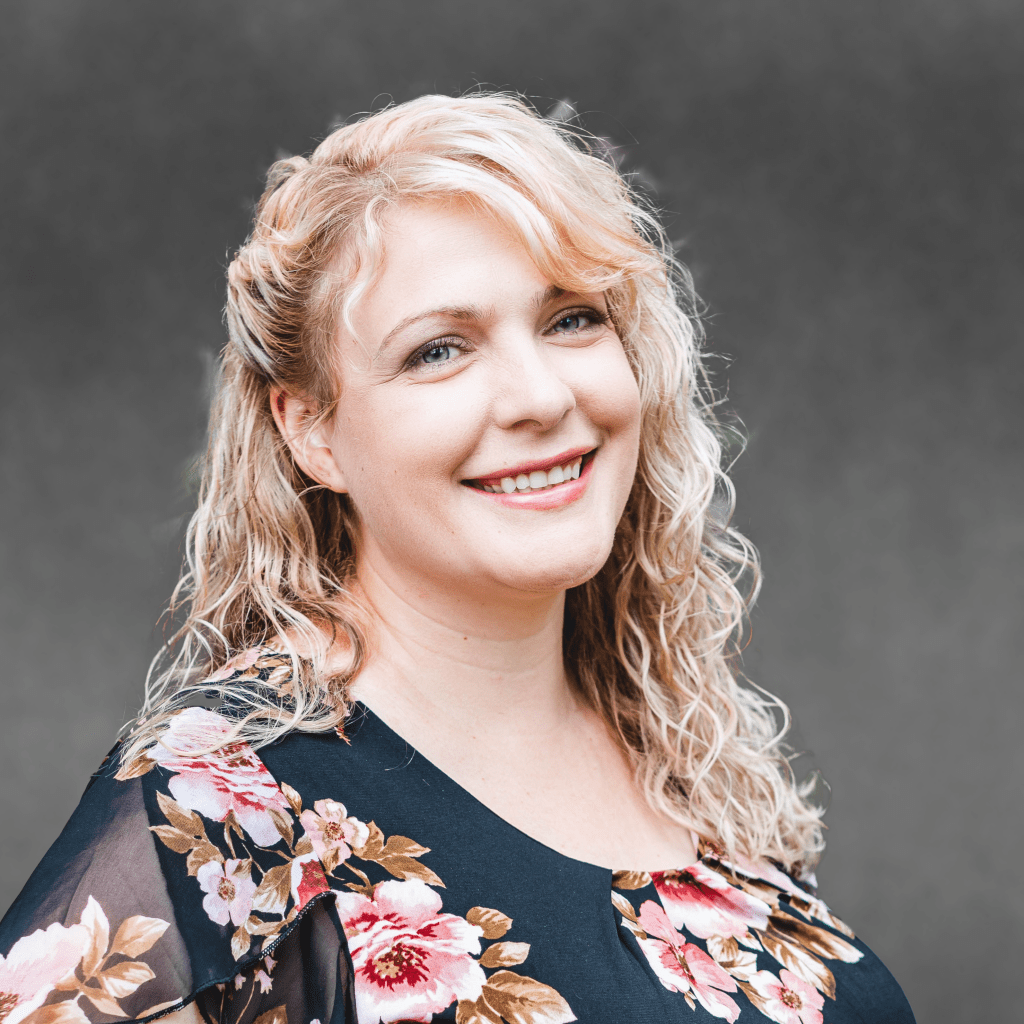
Day 2 with Christine LIndsay

Christine with a group of students while
visiting India on a writing assignment.


Today we welcome back award-winning novelist Christine Lindsay. Christine was born in Ireland, but now lives on the Pacific coast of Canada, about two hundred miles north of Seattle.
What does a typical day in the writing life of Christine Lindsay look like?
Devotions are a must, then I sit down in my pretty window cubby to write on a flower printed sofa with my lap top. I’m blessed if I can get six hours of uninterrupted writing, but there are people in my life who need me and whom I love. So I trust to God to manage my schedule. His will must come first.
Describe your office or favorite work space.
A deep-set window with a sofa up against the window. I look out on mountains and trees just past the rooftops of my neighbors. A dreamy sort of place. I have a small antique table at my side to hold my cup of tea, and a favorite quilt of my mother’s covers my sofa with soft peach and pale green flowers. Lots of pretty cushions too, to brighten things up. A feminine, dreamy sort of spot.

If you could book a reservation anywhere in the world for a week-long, all-by-yourself writer’s retreat, where would you go? Without needing to worry about anyone else’s needs for seven days, what kind of writing schedule would you keep?
I’ve always wanted to go to a cabin overlooking a lake. A nice kitchen and a shady porch where I can sit comfortably with my laptop and glance up from the story every once in a while to look at a peaceful lake surrounded by trees. I’d get up early with the dawn and watch the mist evaporate off the lake’s surface with a cup of hot tea. Then I’d pray and start to write, stopping only for occasional walks and meals. I’d keep writing until an early bedtime, and curl up in front of a cosy fire with a good book.

But really, I’d love to take my husband too. He’d love to go fishing while I was writing. In fact, I’m praying for just such a writing holiday.

Do you have any abandoned stories (finished or unfinished) hiding away in files? 
I often find that if you wait long enough, those abandoned stories find a home. There was a non-fiction book on my laptop—the true story of relinquishing my first child to adoption and our reunion twenty years later, and how God used the brokenness of that experience as a muse to get me writing in the first place. This true-life story is also the basis for my speaking engagements. Through that loss of my first child to adoption, I have learned so much about God’s love for us.

That story may be finding a home right now with a publisher. More details to come later.

We’ll be praying with you for that project, Christine. It sounds like a story that needs to be heard.

What’s next? What can we look forward to reading from Christine Lindsay in the future?
I am currently writing the third and final book to the British Raj series called Veiled at Midnight that will be released by WhiteFire Publishing February 2014. I also just signed a contract with WhiteRose Publishing for a Christian romance novella set in Londonderry Ireland. This Londonderry story is a contemporary.
           
Any final comments?
It is my prayer every day that those who read anything I have written, or heard me speak, will come to know how much God the Father loves them. This is the basis of all I do and say. May His face shine upon you this day.

Thank you, Christine. It’s been a joy getting to know you and your stories.

Answer Christine‘s question below for a chance to win a copy of Captured by Moonlight. This week we will be giving away TWO copies! Include your email address in the form of name[at]domain[dot]com and respond before 8:30 a.m. EDT this Friday morning to qualify for the drawing. This week, U.S. and Canada readers may qualify. 
If you could choose any place in South East Asia to visit, where would that be?


Tuesday, May 21, 2013

Meet Christine Lindsay


Irish-born Christine Lindsay writes award-winning historical novels. She delights in weaving the endless theme of the Heavenly Father's redemptive love throughout stories of danger, suspense, adventure, and romance. 

Welcome, Christine. Tell us a little about your current release. 
Captured by Moonlight is Book 2 of my historical series Twilight of the British Raj. Not many people in America know much about this fascinating era of British history, but this was a time filled with as much adventure, excitement, Romance, and swashbuckling heroism as the Wild West was in the US.


What was the initial spark for this story? Describe the journey from story idea to finished manuscript.

As I was writing my debut novel Shadowed in Silk which won two awards and was a finalist for two more awards, I realized that I was only starting the story. Book 1 starts off with the first rumors of rebellion and the Indian people’s desire to shake off British rule. That started with a traumatic event in 1919, but the Indian independence happened in 1947. There was so much to tell, so that the full story had to be a three-book series leading up to the Partition of India.


But history alone does not satisfy me. I need a story with a deep spiritual thread, and a big love story, so I had to take some of the characters from Shadowed in Silk and continue on with their stories in Captured by Moonlight.


In what (if any) ways are your characters Laine and Eshana like you? Was this intentional? Do either of them have qualities you wish you possessed?

Both Laine and Eshana came out of Shadowed in Silk, and both ladies are such spunky characters, they simply demanded I tell their story. I very much admire both Laine, as a nurse in the Queen Alexandra Imperial Nursing Corp, and Eshana, an Indian Christian missionary.


Laine and Eshana are brave, self-sacrificing women, who can stride into a sad situation with practically no fear to help others. Yet at the same time they have their own human yearnings. Laine still remembers her lost love and can’t understand his ending their engagement, and Eshana yearns to serve God by fully pouring herself out for His Glory.


I’d love to be as brave as Laine, and as totally surrendered to God as Eshana. I guess in a way, Eshana is a type of prayer for me—the woman who totally dies to herself so that Christ may live through her.


If you could transport Eshana to 2013, where do you think she’d be living and how would she occupy her time?

Eshana would be running a mission for widows and orphans exactly as she was doing in 1920. She would most likely be working at the Mukti Mission in India that was first developed by a great Indian Christian woman called Pandita Ramabai who is featured in Captured by Moonlight along with other true-life Christian heroes from that time such as Dr. Ida Scudder.

How would your characters finish these statements:

Laine: What frustrates me more than anything is: people who break their promises.
Eshana: When I was a child I wanted to grow up to be: just like my beautiful mother, but then I was taken away from her too young.

Laine: The main quality I look for in a friend is: kindness, plain simple kindness.

Eshana: If I suddenly inherited a lot of money I would: start another mission to help widows and orphans. 

Thanks for visiting, Christine, we look forward to learning more about you and your writing tomorrow.


Answer Christine‘s question below for a chance to win a copy of Captured by Moonlight. This week we will be offering TWO copies! Include your email address in the form of name[at]domain[dot]com and respond before 8:30 a.m. EDT this Friday morning to qualify for the drawing. U.S. and Canada readers may qualify.
If you could choose any place in South East Asia to visit, where would that be?


Sunday, May 19, 2013

This Week's Winner . . .


The winner of this week’s drawing for Kaye Dacus’ novel,

Follow the Heart, is Dee! Congratulations!

Thanks to everyone who participated this week. Your fun
and creative answers are appreciated.

Happy reading, everyone!

Thursday, May 16, 2013

Review: Moonlight Masquerade


Moonlight Masquerade
By Ruth Axtell
Revell, March 2013

About the Book

Lady Celine Wexham seems the model British subject. French by birth but enjoying life in 1813 as a widowed English countess, she is in the unique position of being able to help those in need—or to spy for the notorious Napoleon Bonaparte.

When Rees Phillips of the British Foreign Office is sent to pose as the countess’s butler and discover where her true loyalties lie, he is confident he will uncover the truth. But the longer he is in her fashionable townhouse in London’s West End, the more his staunch loyalty to the Crown begins to waver as he falls under Lady Wexham’s spell.

Will he find the proof he needs? And if she is a spy after all, will he do the right thing?

My Review

This is the first book I’ve read by this author, and I really enjoyed this Regency. The era when Napoleon waged war with the rest of the world is a fascinating time in history. I liked the French and English settings in the book and the theme of spying for either side in the midst of war. This was well done. The tension was so delicious it was even palpable at times.

I read this book in a few days. The best part was probably the setting. It had a definite Regency feel to it, but that was what I wanted. There have been other Regency novels that I’ve read in the past that didn’t feel nearly as authentic when it came to the setting. Somehow the author even made the romance believable. The difference between stations was no easy hurdle, but it worked the way she put it all together.

Oh, speaking of romance, there was a lot of tension between characters. Though they didn’t have much physical contact, you could feel the pull between them. And when they did kiss, well, fireworks went off in the background. Okay, that’s a bit of an overly dramatic description, but the kisses were intense enough to melt my heart. I wanted them to be together despite their many obstacles. The hero was a good guy and he did the right thing.

The faith element was believable as well, and I found myself quite inspired by it. All in all, a very good read. I would definitely recommend it to Regency lovers.

Michelle Sutton
Healing Hearts . . . fiction making an impact on real lives
New titles releasing in 2013: Collette’s Crusade, Learning to Trust, Somebody Help Me,
Her Innocence, and Serena’s Something

Wednesday, May 15, 2013

Kaye Dacus Interview -- Day Two

Kaye Dacus is the author of humorous, hope-filled contemporary and historical romances with Barbour Publishing, Harvest House Publishers, and B&H Publishing. She holds a Master of Arts in Writing Popular Fiction from Seton Hill University, is a former Vice President of American Christian Fiction Writers, and currently serves as President of Middle Tennessee Christian Writers. Kaye lives in Nashville, Tennessee, where she is a full-time academic advisor and part-time English instructor for Bethel University.


Welcome back, Kaye. If you’re anything like I am, one favorite book is hard to pick! Do you have two or three top picks among the historical genre that you would care to recommend?

A couple of my favorite Christian historical fiction authors are Sandra Byrd (I adore her recent Tudor-set novels), Julie Klassen (The Silent Governess is my favorite so far, but I haven’t read the latest yet), and MaryLu Tyndall (how can I, with a pirate story of my own, not love the queen of the Christian Pirate Romance?).

What do you consider the best resources for historical research?

For me, I found my best resources on mid-Victorian England and the Great Exhibition in extant sources on Google Books. I found tons of guidebooks, souvenir books, and other printed materials about the Great Exhibition there. I also found a lot of information on the Victoria and Albert Museum site—as the artifacts from the GE were used as the foundation of the collections at what became the V&A. I also read novels published in the period in which I’m writing (so lots of Dickens and Gaskell this time) for social and dialogue habits and patterns. The Internet has made historical research both easier and more hazardous. Easier in that there are so many more avenues through which we can find information that we didn’t have twenty years ago, but more hazardous because it’s a lot harder to discern what’s a reliable source and what isn’t. I tend to stick with museum sites and published materials (books, periodicals) from the time period. But I’ll admit that sometimes I start with Wikipedia. I never rely fully on it, but it sure is convenient when I need info quickly!

What or who inspired you to write inspirational fiction? How does that keep you plodding ahead with your writing each day?

I never set out to write inspirational fiction. When I started writing, I didn’t know there was such a thing. (Actually, when I started writing, there really wasn’t.  Janette Oke was just getting started, and it would be years before Frank Peretti or the Left Behind books hit big and really kick started the Christian fiction industry.) I did what I was supposed to do—I wrote what I knew. Because I’d grown up in a Christian home with a Christian worldview, that’s the lens through which I wrote my stories.

When I start a book, I don’t have a spiritual goal or theme in mind. I don’t usually even have a key scripture from which to build that spiritual thread. However, in the course of writing, I always come across something that speaks to me spiritually which I discover has become the inspirational theme of the story. 

What helps you maintain productivity as a writer? And what do you find most challenging about the business of being an author?


It’s hard—and I have to admit that in the first six to eight months after going back to work full-time and starting to teach part-time, it was hard trying to figure out a balance between working, teaching, and writing. But if I put myself on a strict schedule—and make myself meet a word-count goal daily—it gets easier. I do better when I have too much to do than when I don’t have enough.

Do you feel you are more of a character driven or plot driven writer? How do you think it comes across in your writing?

Oh, my stories are definitely character driven. The characters always come to me first (usually the hero) and then everything else gets built around them. Because I write romance, the focus of the story is on the developing relationship between the hero and heroine—and that, then, drives the action of the plot.

Would you like to share about what you are working on now?

I’m currently taking a few weeks’ break to look at the lineup of story ideas I have in the hopper (you can see some of them here: http://kayedacus.com/2013/03/28/planning-for-the-future-future-books-to-write-that-is/). It’s been two years since I finished writing my last contemporary (Turnabout’s Fair Play), so I’m kind of itching to get back to the modern-day for a little break before diving into another historical series.

Do you have any last words of wisdom to share with aspiring authors?

The best advice I got when I first started getting serious about learning the craft and pursuing publication: Above all else, FINISH YOUR FIRST DRAFT! You can fix anything but a blank page. The most important thing is to get your entire story down on paper before you start worrying about all of the technical craft things and stressing yourself out about “making it perfect.” Just write.

Thank you, Kaye, for joining us at Novel PASTimes. It has been a privilege to interview you.


Please leave a comment by answering the question Kaye is asking below for a chance to win her novel, Follow the Heart. Don't forget to include your email address in the form of name[at]domain[dot]com before 8:30 a.m. EDT this Friday morning to qualify for the drawing.

Kaye's question: If you were to star in a romantic costume-drama movie, what era would it be set in, and what actor would you choose to play your leading man?

Other places you can find Kaye and more information about her writing:


Twitter: http://www.twitter.com/kayedacus (@kayedacus)


Tuesday, May 14, 2013

Kaye Dacus Interview


Kaye Dacus is the author of humorous, hope-filled contemporary and historical romances with Barbour Publishing, Harvest House Publishers, and B&H Publishing. She holds a Master of Arts in Writing Popular Fiction from Seton Hill University, is a former Vice President of American Christian Fiction Writers, and currently serves as President of Middle Tennessee Christian Writers. Kaye lives in Nashville, Tennessee, where she is a full-time academic advisor and part-time English instructor for Bethel University.


Kaye, it’s great to have you at Novel PASTimes today. Could you share with us some of the surprises you’ve encountered along the road to publishing?

I think for me, the biggest surprise has been in how far my books have reached. I never expected to be a bestseller (and I’m not, really), but I occasionally get emails or blog comments from people all over the world who’ve read my books, and it’s humbling.

Please tell us something about your latest novel, Follow the Heart.

Follow the Heart is a Victorian-set “sitting room” romance along the lines of my favorite Regency romances. After writing the action-adventure of Royal Navy officers and pirates in the “Ransome Trilogy”, I wanted something more intimate for my new historicals. Because I’m fascinated by Prince Albert’s Great Exhibition of 1851, I decided that would be a perfect time to set the story. I also enjoy Downton Abbey and other stories about Americans marrying into British society—but I wanted something a little different, so I made the American woman the one who needs to marry money, not the other way around. And it’s the beginning of the Industrial Revolution, so I could make my characters much more mobile than before—a couple of hours by train from Oxford to London, England—as well as connect the characters to the wider world better than ever before. So while it still has that sitting-room sensibility of a Regency (with house parties and balls and plenty of society), it has the conveniences of the Victorian age.

Follow the Heart is set in historical England. What drew you to write about this time period and the location of your story?

In 2001, I watched Victoria & Albert on A&E and fell in love with the love story of these two monarchs of England. But that wasn’t the only thing I took away from it. I was also fascinated by the scenes which portrayed the planning and opening of The Great Exhibition in 1851. Then, a few years later, I watched another mini-series: North & South. No, not the one about the American Civil War, the one based on the classic, but little-known, novel by Elizabeth Gaskell. It also has a scene that takes place at the Great Exhibition. Once I saw that, I was hooked—on the era and on the event.

I read at least three or four British-set historical romances each month—and without fail, the majority of them are set in London. It’s a setting that has become over-exposed. Also, with a landscape architect as my main hero, I needed the action to take place at a country house, not in the city. By the 1850s, Oxford was a large enough city to have railway service to all of the other major cities, but still quaint/small enough to give the small-town feel that I love to use in my stories. Plus, there was a lot of chaos happening in London in early 1851 due to the final preparations for the Great Exhibition, and I felt like that could overwhelm what I wanted my story and settings to be.

Have you found that there are similar themes throughout your writing? Why?  Or why not?

Yes—most of my characters tend to have trust issues, whether it’s in trusting other people or in trusting God. And that flows naturally from my own personality and experience. I am not a very trusting person, so I work out a lot of my own questions and doubts about relationships or about allowing God to have control in my characters and their stories.

You discuss on your web site how singleness allows you to look at love and romance in a unique way. Would you care to share about this with our readers?

Many years ago, when involved in a discussion of whether or not single women should write romance novels, I had an epiphany: Romance novels are about SINGLE people—and since we’re told we should write what we know, since I’m single, romance is the perfect genre for me to write!

I never set out to write role-model single-adult characters. But I know from the feedback I’ve received, especially from younger women, that the fact my books feature characters who are older—in their late twenties all the way into their early forties—has let them feel like they’re now off the hook when it comes to relationships. They feel like knowing it’s okay to fall in love or get married for the first time at thirty-five or forty-one is giving them permission to stop focusing on the desperation of marrying before their mid-twenties and look at what God can use them for right now, where they are, in their single state.

Once I realized this, it helped me focus on my ministry—which is to represent a growing segment of the population that seems to be increasingly left out in Christian communities: women in their late twenties, thirties, and early forties (and older) who have never been married and who want to be loved and accepted for who they are, not labeled or shoved to the side. I write these books to help us hang on to the hope of finding a well-adjusted, loving, marriage-minded Christian man and having a “happily ever after” with him—but knowing we first need to learn to be content with being the person God has created us to be in the meantime.

What drew you to writing historical novels?

I’ve always loved history—minored in it in college, in fact—and that love came from reading historical romances growing up. But it was hard for me, at first, to do—because I would get so caught up in the history that I’d lose the story. It wasn’t until I finished four contemporary-set manuscripts that I tried my hand at historical. Once I started writing Ransome’s Honor, I was hooked on the world building and the excuse to do the research (and to watch/collect costume dramas!), but now it was in the capacity of how it would enrich the story. I do still love writing contemporaries as well, though, and hope to return to that soon.

If you’re anything like I am, one favorite book is hard to pick! Do you have two or three top picks among the historical genre that you would care to recommend?

More tomorrow from author Kaye Dacus. Please leave a comment by answering the question Kaye is asking below for a chance to win her novel, Follow the Heart. Don't forget to include your email address in the form of name[at]domain[dot]com before 8:30 a.m. EDT this Friday morning to qualify for the drawing.

Kaye's question: 
If you were to star in a romantic costume-drama movie, what era would it be set in, and what actor would you choose to play your leading man?

Monday, May 13, 2013

May 13 In History


On May 13 in History….


In 1607, the first permanent English settlement in North America was founded: Jamestown, Virginia. The 105 settlers along with a crew of 39, arrived on board three ships called the Susan Constant, Godspeed and Discovery. The settlement was under the direction of seven council members, including the well-known Captain John Smith, an English adventurer.

Settling this new colony became a dangerous venture as, within two weeks of their arrival , the English were under attack by native Algonquin warriors who were not happy with the intrusion into their land. In December of that year, while searching for provisions in the wilderness, Captain Smith and two other colonists were captured by the natives; Smith was the only survivor of this trio. According to his writings years later, he credits the intercession of Pocahontas (the chief’s daughter) for saving his life.

But this was not the end of the colonists’ woes. Disease, starvation and more attacks by Native Americans plagued the group. The worst trial became the terrible winter of 1609 – 1610 when most of the colonists died. This prompted the survivors to plan a return to England the following spring. But in June, reinforcements arrived with supplies and the newly appointed governor of the Virginia Colony, Thomas West De La Warr, convinced the remaining settlers to stay.

In 1612, tobacco was planted in Jamestown, which became a successful source of livelihood for the colony.

Wars continued with the Native Americans until 1644, when the new Chief of the Algonquins, who succeeded Pocahontas’ father, was captured and executed.

For an amazing movie about the Jamestown Settlement, buy or rent New World. Just the mention of “Jamestown” causes my husband to plan a trip to the video store. I know—we still don’t use NetFlix. We’re so low tech… J


Also on May 13…

1568 – Mary Queen of Scots is defeated by the English at the Battle of Langside.

1767 – Mozart’s opera, “Apollo et Hyacinthus” premiers in Salzburg.

1846 – US declares war on Mexico, two months after fighting begins.

1865 – At Brownsville, Texas (Palmito Ranch), the final engagement of the Civil War takes place. PVT John Williams of the 34th Indiana is the last man killed in the war.

1912 – The Royal Flying Corps forms in England.

1916 – Native American Day is observed.

1930 – The only known fatality from hail—a farmer in Lubbock, Texas—is killed.

1940 – Winston Churchill gives his first speech as Prime Minister of England. He says, “I have nothing to offer but blood, toil, tears and sweat.”


Indeed, Mr. Churchill’s words of long ago should inspire us all to offer our very best, wherever the Lord has planted us.

May your May 13th be BLESSED!


Jamestown image from http://mrnussbaum.com