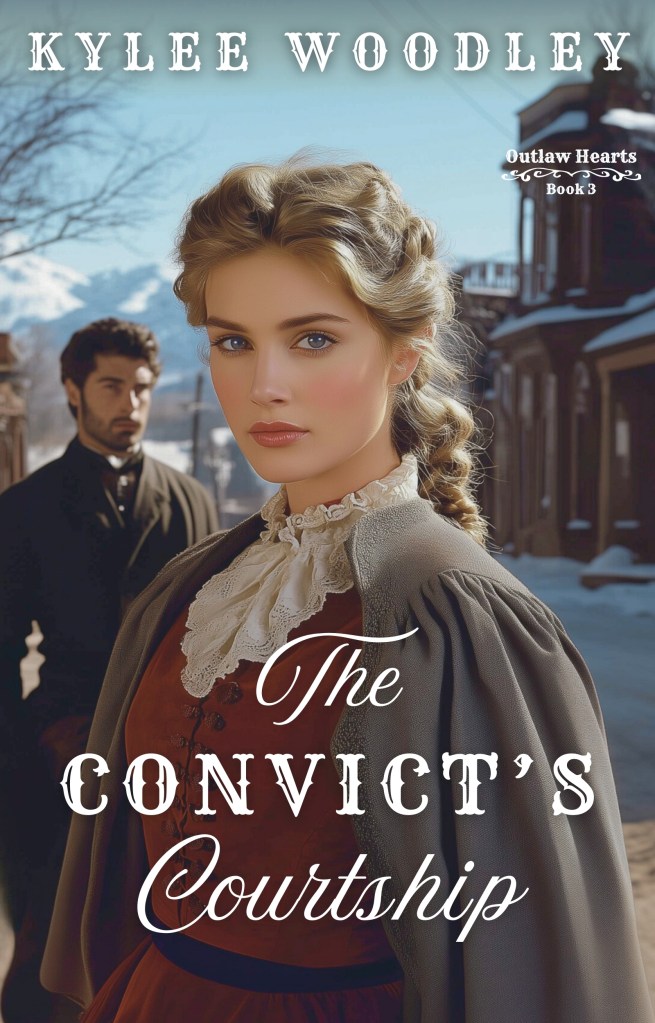
Couple’s Interview: Clara Alexander & Beau (Fox) Vulpe from The Convict’s Courtship by Kylee Woodley


Interviewer: Thank you both for joining me. Clara, perhaps we’ll begin with you. What first
drew your attention to Beau?


Clara: Raises her eyebrows and folds her hands in her lap, shooting Beau a grin. He gestures
for her to answer.
Well, as it so happens, Beau and I met by unconventional methods. At the
time, I was pursuing a career in journalism and had the grand idea to go below ground and collect an ore sample. You see, Virginia City sits on a massive silver deposit called the Comstock Lode. For many years, newspaper reporters have collected ore samples for the purpose of recommending the mine. In fact, the great Mark Twain records doing just this in his book
Roughing It. He, however, had a friend lower him down by rope, but then his friend played a dirty trick on him. He left him below ground until the miners returned from lunch to haul him up.


Beau: Quiet rumble of a chuckle as he clasps Clara’s hand. Bon… I think what drew her to me was my good looks. He winks, and she flushes.


Clara: Oh, I apologize—you asked what drew me to him. It was his steadiness. He was respectful and strong. I was dressed indecently—in a miner’s outfit with overalls. He led me to water, then protected me from a man of basest intentions. She pauses. But, of course, you will have to read our tale to hear more of that.

Interviewer: Ahh, yes! I have a copy of it. Thank you. Can’t wait to start.Now, Beau, you have a beautiful accent. You are French?


Beau: He nods solemnly. Oui… in part. I was born in ’45 to a Roma woman in France. When she died, I was sent to a Frenchman I did not know—my father. From there, I was raised among the French elite. Attended French schools. Served in the military.


Interviewer: And what was it like living in France during those years?


Beau: He glances at Clara, and she gives him an encouraging nod. It was hard. There was civil unrest, then the Franco-Prussian War in 1870–1871. I came to America after France lost—looking for peace, only to find more trouble.


Interviewer: I remember some of that trouble from books one and two.


Beau: He grimaces, then shrugs with a chuckle. To be sure. I found much trouble.


Interviewer: And you went by the name Fox during your time in Idaho and California. In fact, according to your bio, you spent much of your early acquaintance with Clara hiding who you were. What was the hardest part of that?


Beau: Long pause. At first, it was the danger of exposing myself to an Alexander. I have a history of conflict with this family starting in book one—The Bandit’s Redemption. I was on the run, and I could not risk drawing attention. But with time… je crois the hardest part was lying by omission to Clara and to those who showed me kindness. I owe her family more than I can say. I wanted to be worthy of her trust. Yet every smile she gave me felt like a debt I could never repay. And I feared that when she learned the truth, she would see only the man I once was—not the one I am trying to become.


Clara: And yet, when I did learn the truth, I found a humble man committed to do what was right at great expense to himself. She tugs at his hand, as though to reassure him, then turns to the interviewer. Beau carried guilt for so long, as though it were a physical burden. He sometimes forgets that redemption is not earned by suffering. It is received by grace.


Beau: Softly. She reminds me often.


Interviewer: Yes! Like it says in Psalm 103:12: “As far as the east is from the west, so far has He removed our transgressions from us.” It gives you a wonderful feeling of freedom to be separated from your sins and joined with God.


Beau and Clara: Amen. It’s true.


Interviewer: Now shifting to a lighter topic—romance—what surprised you most about each other?


Clara: His tenderness. One would not expect a man who can lift a timber beam with his bare hands to handle a woman’s heart with such care. But he does.


Beau: Clears throat. And I was surprised that someone who was groomed to be a demure lady would be outspoken in the most intriguing ways. Always, Clara has these “did you know” statements about the history of horses, the Suez Canal, Egypt’s geography, British law… I never know what she will tell me next, but I am always surprised. She fascinates me.


Interviewer: Last question. What do you hope your future looks like?


Clara: Well, I don’t want to give away any spoilers, but I am working steadily now—though not as I expected when I started my pursuit of a career in journalism. We hope to have a family someday. Clara blushes while Beau shows his first real, white smile. For now, we are making a home of our own and learning what it means to be a family—just the two of us.


Beau: Peace. Belonging. And Clara beside me. Always. God has brought us through an incredible challenge. I don’t know what more might be ahead, but we will face it together. With Him.


Clara: Soft smile. Then we’re agreed.


KyLee Woodley writes inspirational historical romance with a pinch of adventure. A cheery romantic, she loves to evoke bygone days and heartwarming love stories. KyLee teaches preschool at a lab school in Texas, where she lives with her husband and their three teenage children. Historical Bookworm Show—a steadily growing podcast for history lovers and fans of historical fiction. Raised in the Pacific Northwest and now rooted in Texas, KyLee carries a deep respect for American values and the power of redemption. She began ministering to the homeless and addicted as a teenager, and that compassion continues to shape her stories—loving the unlovely is a timeless theme.
In her spare time, she cares for a feisty feline named Hazel and two adorable Boston Terrier puppies. She listens to contemporary Christian, country, and early 2000s rock, visits bookstores and coffee shops with her teens, and watches adventure movies with her husband, who might resemble Superman.

Amazon: https://www.amazon.com/dp/B0F4LZG5SH
B&N: https://www.barnesandnoble.com/w/the-convicts-courtship-kylee-woodley/1147269691?ean=2940181206946
Apple: https://books.apple.com/us/book/the-convicts-courtship/id6744539071
Kobo: https://www.kobo.com/us/en/ebook/the-convict-s-courtship
Books to Read: https://books2read.com/u/b6XgOJ

Social Media:
https://www.facebook.com/WoodleyWrites
https://twitter.com/KyLeeWoodley
https://www.instagram.com/kylee.woodley.writes/
https://www.pinterest.com/kypins13/
Podcast: https://historicalbookworm.com/?page_id=41
Personal Website: https://kyleewoodley.com/

A Chat with Cora Scott from Texas Reclaimed by Sherry Shindelar

Cora, please tell us about your life:

I live a few miles outside of Weatherford, TX on the edge of the Texas frontier. During the Civil War the line of settlement rolled back more than one hundred miles. The men were off at war, and the Comanches and Kiowa knew it. They raided relentlessly seeking to take back what had been taken from them. My family came to this area from Tennessee in the mid-1850’s after my father disgraced the family name by cheating at gambling. My mother loved him dearly, and she was willing to follow him into the wilderness and beyond.

Starting a ranch in Parker County was dangerous, but my family came to love the land. My father and uncle built a double-log cabin, two cabins joined together by a wide hallway, with heavy doors protecting either end. Our cabin, barns, and grounds were like a small fortress. We were ready for attack. And attacks came. 

Wow! That sounds like a big undertaking! What other trials did you face?

It was my father’s drinking and the war that really ravaged our family.

By the time the Civil War ended, there was no one left but me and little half-brother Charlie. Charlie was my father’s secret son from a Comanche woman. Right about the time the war started, she brought the boy to my family for us to raise. My mother, saint that she was, took him in and loved him like her own son. My father was a different story, could hardly even look at the boy.

After my parents’ passed, some folks said I should go back to Tennessee where I had kin, forget the ranch. But these were the same folks who’d been wagging their tongues about Charlie for years, especially since my family moved to town during the war.

How sad, Cora. I’m sorry for your loss. What did you do next? 

I wasn’t having anything of it. I packed Charlie up, and we left the rented room and returned to the weathered ranch. My family had sweated and bled for that land. It had become our home. Besides, I couldn’t give hope that Jeb, my older brother who’d left home after a falling out with our pa years before, would return. Jeb joined the Union forces during the war, fought as a Yankee, but that didn’t make no mind to me. He was my brother, the best friend I’d ever had.

That was brave of you and Charlie. What happened when you returned to the ranch? 

After our return to the ranch, some land speculator showed up claiming Pa owed him a gambling debt and had signed over the ranch as a guarantee. The scoundrel aimed to steal our home, willing to go to court to do so. Well, I wasn’t having nothing of it. Days later, I headed into town and offered to sell him a third of the property as payment, but the greedy scum wanted all of it. Dear Lord in heaven, I didn’t know what I was going to do. But I couldn’t, wouldn’t give up.

Good for you for not giving up! What happened next?

Then, a stranger showed up. His fine-threaded sack coat and trousers covered with dust, as if he’d traveled a long way. The slightest trace of a limp in his left leg, he walked slowly across the furrowed rows of freshly turned dirt where I stood whacking away at clods. A lock or two of dark brown hair dipped onto his forehead beneath his slouch hat. He carried himself with the firmness of chin and posture that made me think he’d probably been an officer during the war, but there was a haggardness about his features that bespoke a man weary of battle.

As soon as he spoke, I knew he was a Yankee, not a trace of Southern in his speech. And his words about knocked me to my knees. My brother Jeb was dead, and had sent this man, his friend, in his stead to look after us…

As if I needed looking after. Of course, I greatly appreciated his coming and bringing word of Jeb, and I drank up every word he had to say about their friendship. However, the man, Ben McKenzie was his name, tried to spare us the gruesome details of what it was like for him and Jeb in Andersonville Prison Camp, but I could see the soul-deep shadows in his hazel eyes. A gaze that quickened my pulse and drew me in, when common sense said run. 

Ben McKenzie needed to head right back to Pennsylvania where he’d come from, but he was a stubborn man, not prone to listening to reason.

I’d love to learn more about this Ben McKenzie, but we’ll have to save that for another time. Sounds like he showed up right when you could use the help. 

About Sherry Shindelar: Originally from Tennessee, Sherry loves to take her readers into the past and share her faith. She is an avid student of the Civil War and the Old West. She’s always been a romantic at heart. When she is not busy writing, she is an English professor working to pass on her love of writing to her students. Sherry is an award-winning writer: 2023 Genesis finalist, Maggie finalist, and Crown finalist. She currently resides in Minnesota with her husband of thirty-eight years (Their romance started on a city bus on Valentine’s Day). She has three grown children and three grandchildren.

You can find Sherry and her book online at these links.

Instagram: sherryshindelarauthor

FB Author page

Sherry Shindelar Author Goodreads author page

Bookbub author page

Find Texas Reclaimed HERE.

Meet Eli Boswell from The Montana Gold Mine by Tim Piper

Affiliate link used helps support this blog.

About the Book:

In Spring 1874, the American economy is descending into a depression, following the collapse of Jay Cooke’s financial empire. Amid the chain of bank and business failures set off by Cooke’s bankruptcy, Jubilee Walker struggles to keep Warner and Walker Outfitters solvent.  

Jubil’s grand plans for developing Yellowstone National Park into a popular tourist destination were dashed when Cooke’s business plan failed, but he is still determined to fulfill the park’s potential—not to mention his promise to his friend White Dog to end the corruption affecting the well-being of the people living on the Crow reservation. 

When Jubil solicits support from the highest levels of government, he sets off a chain of events that puts not only him but the ones he loves most in grave danger. What is the nature of the secret Jubil’s nemesis is hiding? And how far will he go to protect it? Book four in the Jubilee Walker series is loosely based on historical events.


Welcome to Novel PASTimes! We are pleased you stopped by today.

Thanks for inviting me.

Tell us a bit about yourself.

My name is Elijah Boswell, but everyone calls me Eli. I’m twenty-one years old. I have a twin brother named Isaac, Ike for short. Our sister, Nelly, is two years older than us. That’s not her Christian name, but if I told you her real name, she’d be angry and get revenge on me somehow. We grew up in Bloomington, Illinois, which is where our parents still live. Our father works in a carriage shop and is a very skilled carpenter. Our mother makes the best fried chicken and apple pie you’ll ever taste, and I’m not the only one who thinks so.

How did you become acquainted with Jubilee Walker?

I’ve known Jubil for as long as I can remember. Our family had a farm outside of Bloomington for a while, and Jubil’s parents owned the farm next door. We went to school together. He and Nelly have always been best friends. Even though he’s three years old than my brother and me, he tolerates us—which says more about his character than you might think. While he was gone on his first adventure to the West with Major John Wesley Powell, he asked me and Ike to take care of his property, and we accidently burned down his farmhouse and barn. When I think of it, I can hardly believe he’s still friendly toward us. But I guess we made up for it. And I guess it’s lucky for us that he and Nelly turned sweet on each other. Now they’re married, so Jubil is my brother-in-law. He trusts me and Ike enough now to let us work for his business, Warner and Walker Outfitters.

What is the nature of your employment with Mr. Walker?

Our first job for Jubil was helping him and Luke Warner, his business partner at the time, start up their store in Bloomington. Ike and I worked for no pay for a year to repay the damage to Jubil’s homestead. After our debt was paid, we kept working for Jubil, because we like the work, and we’re good enough at it that Jubil wants to keep us on. Ike helps with the management issues and new product design, and I’m the top salesman and stock clerk.

The problem is that an enemy of Jubil’s—a man Jubil ran into trouble with while he was exploring in Yellowstone in 1871—hired someone out of spite to burn down the store. Luke died in that fire, and Jubil moved us to Council Bluffs, Iowa, to take over Luke’s father’s store. As much as I enjoy working in the store in Council Bluffs, what I really want to do is help Jubil with his adventure tour business. This summer, we’re leading our first group of tourists along the same route Jubil took in 1868 while he was exploring in Colorado with Major Powell.

Is Warner and Walker Outfitters a successful business?

It was, up until last year. The whole economy’s gone into a depression, and we’ve been struggling. Jubil was deeply involved with Jay Cooke, whose investment house went bankrupt after the Northern Pacific Railroad deal fell apart. Jubil almost lost Warner and Walker entirely, because the market has gone cold. The stylish business and leisure travelers who used to buy our goods aren’t buying anymore, so we’ve been focusing on more basic goods. Jubil also has connections in the military, so he’s trying to get more supply business at the forts within reach. He’s considering expanding into the Montana Territory by putting a new store in Bozeman to supply Fort Ellis. That store would also serve as a base for the adventure tours we’ll offer into Yellowstone Park. The Crow reservation is nearby, and we might eventually be able to get the supply contract there, but there are some issues Jubil needs to get resolved there first.

Wasn’t Jubilee Walker involved in some trouble in Bozeman a few years ago?

Well, that’s true, but none of it was Jubil’s fault. Back in 1871, after the Washburn Expedition into Yellowstone, Jubil and the other explorers vowed to lobby the government to make it a national park to protect it from being exploited. A man in Bozeman named Phineas Black took exception to that plan, because he owned gold mines near the Yellowstone Basin and stood to lose a good bit if the government took the land for the park. That wasn’t all Black took exception to. Jubil was determined to stop Black’s mercantile, which was supplying the Crow reservation, from defrauding both the tribe and the government. Black ended up drawing Jubil into a gunfight, and Jubil—with the help of his friend, the Crow scout White Dog—prevailed.

Are all those issues settled now?

Not entirely. Congress managed to declare Yellowstone a national park, but there’s no funding to protect it. I know Jubil is concerned about that and doing what he can to influence the situation. Meanwhile, there’s still fraud going on at the Crow reservation. What are the Crow people supposed to do when they’re sent rotten grain and sickly livestock? How can they survive? With Phineas Black out of the picture, we’re wondering who’s behind the problem this time. Jubil’s not eager to draw any attention his way if he doesn’t have to. He’s hoping one of his government friends can solve the problem. Once that happens, we can win the supply contract for the reservation and open a new store in Bozeman.

Do you plan to stay with Warner and Walker Outfitters?

If everything goes as planned. If we open a new store in Bozeman, I’ll likely be the one to manage it and leave the Council Bluffs store to Ike. I also have high hopes for our adventure tour business. If the tour this summer goes well, it could help our stores weather the slow economy. I like working with Jubil. He has bold ideas, and he’s not afraid to do what others are too timid to take on.


Tim Piper is retired from a long career in Information Technology and has been a lifelong hobbyist musician. In his earlier days he was an avid hiker and backcountry camper, but his adventures these days are less strenuous and more comfortable. He began his education at Illinois State University as an English major, but life circumstances put him on a more pragmatic path, and he graduated with a BS in Business Admin, a degree he finds appropriately named. He lives in Bloomington, Illinois. 
Learn more at www.timpiper-author.com or follow him on Facebook.

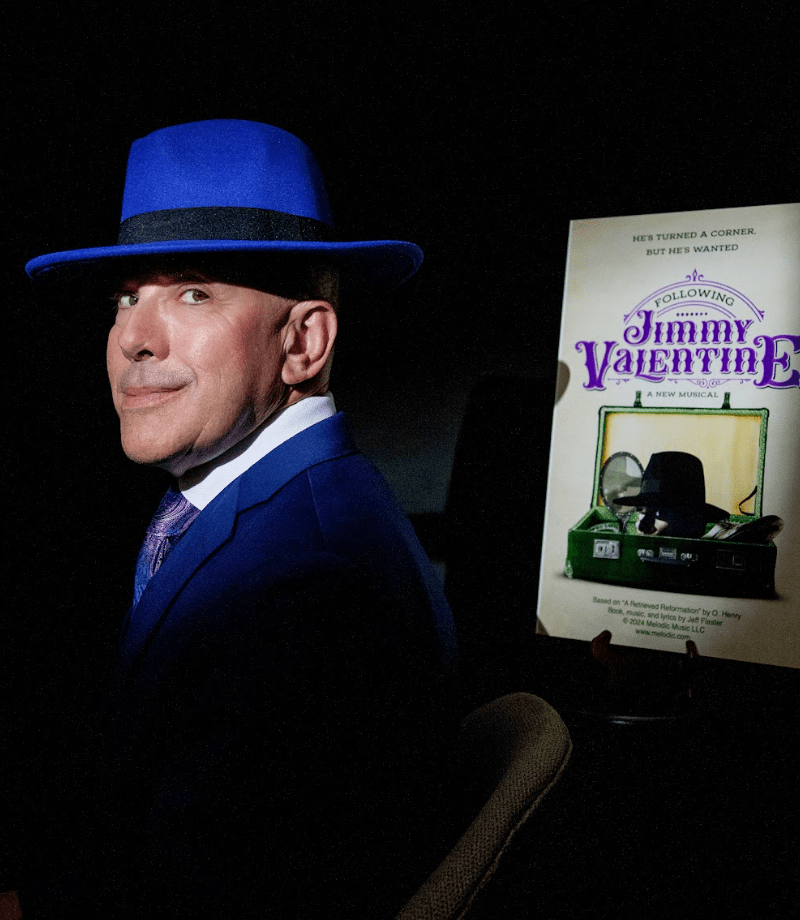
Chat with Valentine’s Reflection from the novel Following Jimmy Valentine by Jeff Flaster © in 2025 Melodic Music LLC

From Amazon: A full-cast audiobook musical told entirely through story and song.

Notorious jewel thief Jimmy Valentine (Hadley Fraser: “Phantom”, “City of Angels”) swears he’s going straight this time. But Jimmy has baggage that won’t fit in his suitcase of burglar’s tools. Soon after his release from prison, he’s back to his old habits.

Disillusioned New Orleans detective Jen Price (Kerry Ellis: “Wicked”) wants to catch Jimmy Valentine—and feel like a hero again. But Jimmy isn’t the villain she’d hoped he’d be. While hiding in a small town, Jimmy falls in love with Annabel Adams (Celinde Schoenmaker: “Guys and Dolls”). For the first time, Valentine dares to believe in a new life.

But is it too late?

Author Jeff Flaster’s reinvention of O. Henry’s classic short story combines world-class performances with a score that blends classical, jazz and classic rock into melodic storytelling that stays with listeners after the final note.

Cast album available on major music-streaming platforms.


U.S. Bureau of (redacted), 

File from 1922: 

In (redacted), Louisiana, 

Wearing a trench coat and fedora, Op13 emerges from the shadows of the morning mist. 

Henry Spencer? 

Yes? 

Let’s talk.  

Who are you? 

That’s classified. Call me Op13. But listen, I know what you are

So what? I’m just a humble shoe-store owner. 

Op displays her Bureau card. 

Oh. I’ve been expecting you. Decent pic for Bureau issue.  

Thanks. I like my job. 

Me too.  

As good a place to start as any. First, though, for the record, please. You’re Jimmy Valentine’s Reflection? 

Yes. And I’ve come through the mirror, changing places with him, but only temporarily, with the alias Henry Spencer. 

And you like your job because? 

I’m proud that I am helping people when they reinvent themselves.

The Bureau people worry sometimes that you help a bit too much. 

No need to fret. It’s only natural.  When you look into the mirror, what do you hear

Wait. Is that you

No. Of course not. You don’t need us. But it’s not that different. When you look at your reflection, you might see only what’s there now, as you prepare to face the day. But sometimes, you’ll be looking deeper, not only at what is, but also at what you could be. 

What. Not who? 

Yes. We really do mean what

Don’t you just mean “find yourself”? 

No. We help you make yourself, changing what you can, for instance, What you do, and what it means to be the person in your body; How you feel, how you react. but also learning to accept the things that you can never change– Your past, especially. That’s the toughest. But other aspects too. It varies. Everyone’s a little different. 

So as for Jimmy Valentine? 

Valentine is very different. Jimmy was a jewel thief. He got some headlines. No, a lot.  He finally heard me in his jail cell on the day of his release. He swore that he’d go straight this time. But he has shell shock from the War.  So though I tried, he stole again.  Eventually I persuaded him  to leave his sculpted flower behind.

And did that help? 

Not by itself. But then he met Miss Annabel, and now he’s going straight at last.  

So then you’re done, and wrapping up? 

Not yet. There are some complications. Detective Price is looking for him.  Jen has troubles of her own, but not Reflection troubles. No, A different, shall we say, Division, Is working with Detective Price. When she made rank, she felt heroic. She wants to feel that way again, So she’s pursuing Valentine, Because he is notorious. she doesn’t know that he’s gone straight.  When she finds him, and she will, Will she care? I want to be there. 

You know you can’t be. 

Are you sure? 

Yes. I’m sorry. 

No, I know. I’ll do everything I can to get him ready for that day, shen he will face his greatest challenge. 

But you’ll be gone before she finds him? 

Yes, I will. You have my word.  

I’ll take it. I was never here. I hope to say the same for you.

You can, because for me, it’s true.


JEFF FLASTER is a New Yorker by birth whose parents were both mathematicians. They had saved since Flaster was born so that they could send him to MIT, and were not pleased when college-aged Flaster asked if he could major in music instead of math. So Flaster made music a minor, but it remained a major in his life. The fact that he is a tenor gave him easy entrée into choirs and ensembles, and he performed regularly in a group at MIT, The Chorallaries. He has also performed at The Kennedy Center with the Choral Arts Society of Washington, and at Tanglewood with the Tanglewood Festival Chorus. Flaster produced three recordings of his original compositions, available on Apple Music. Recently, inspired by O. Henry’s sunnier version of “Les Misérables,” Flaster wrote a full-length musical now called “Following Jimmy Valentine.” The 2021 version of this musical, called “Shell Shock,” was directed by Lennie Watts and can be seen on Melodic Music’s YouTube channel. Flaster’s interest in cabaret was sparked by his father, and by a course he took at 92Y with the late Collette Black. Find out more about him at https://www.melodic.com.

https://www.facebook.com/flasterTunes/, https://www.instagram.com/flaster_tunes/, https://www.youtube.com/channel/UCdnoeRiLJ8I8yZmzAu-ln_w, https://www.amazon.com/Following-Jimmy-Valentine-Retrieved-Reformation/dp/B0FW5QPT36/ref=sr_1_1

A Chat with Britina from Asylum Murders by Michael G. Colburn

Note: Amazon Affiliate link used helps support this blog.

Interview with Britina Myers, best friend of Lady Edith Black
Interviewer: Mr. Thomas Preston, Social Reform reporter, AGE Newspaper, Melbourne AU

T: May I call you Britina or do you prefer Sister Mary Britina?

B: Mr. Preston, I know you’ve done your research; I researched you. You know I gave up my religious life after the events I was involved in at Kew Lunatic Asylum. A term I’m fighting currently in the courts to have changed, but that was its name.

T: Sorry, I am aware and we’ll get to your current activities shortly. How would you like me to address you?

B: Please address me as Miss Myers.

T: Very well, Miss Myers. As you know I am doing a series of articles for the AGE Newspaper entitled The Women of Melbourne Leading Change. I originally requested an interview with Lady Edith Black who has acquired quite a reputation as a woman who solves crimes but also one who is mysterious and reclusive. She turned me down and suggested I interview you.

B: Edie is not reclusive, but she doesn’t give interviews; she is very protective of her past and of her current privacy.

T: Do you have her permission to talk about her past, and her present?

B: Are you interviewing me or using me to find out more about Lady Black, Mr. Preston?

T: Ha, guilty, but I think the fairest answer would be both. You both have a colorful story for our readers, I believe, but let’s start with Lady Black. You are Edith Black’s closest friend, aren’t you?

B: Her closest lady friend, yes. In addition to growing up together, she just saved my life and my sanity. I could easily be dead or confined to the asylum in a drugged stupor if it weren’t for her risking everything to save me.

T: I did read about that, quite a mess up there in Kew. Is it likely that I can get Lady Black to supplement this interview at least by review and comment?

B: Lady Black is traveling to America right now to attend the wedding of a friend, Jack Cramer, or she might have consented to giving you an interview. Your work is well respected. I have her permission to talk about her. 

T: Lady Black said you were sisters.


B: As close as you can be without being related. I’m brown skinned Jamaican, Edie is English and Scottish, but knows little of her family. She was orphaned at ten, or at least as close as you can come to orphaned. Her mother was beaten to death by her father and he disappeared.

We both owe our lives to Benji Diamond who saved us from the slums of East London, taught us to read and think for ourselves, gave us purpose and taught us that there are good caring people in life and we should help those that are less fortunate.

T: I don’t know of Benji Diamond, where is he from? How did he come to save you, as you put it?

B: He was a thief, but a decent thief. He was also a farmer, a successful one.

T: Cough! I’m afraid you caught me off guard there. I’m a little shocked, and you’re smiling like you intended to shock me.

B: I did. Now I’m enjoying the interview.

T: Where is he now, this Benji Diamond? Is he in jail?

B: He’s Lady Black’s husband, and a very wealthy member of society, although he also prefers to avoid publicity about his past as you can imagine.  

T: Miss Myers this interview has taken several directions already. Can I write that about Benji Diamond?

B: Mr. Preston, you signed an agreement that Lady Black could prohibit any information I’m providing from being printed, that will be one piece excluded.

T: I will honor my agreement but please understand I am not here to harm anyone’s reputation. I want the public to know about the important women who deserve recognition in Melbourne society.

B: You can call me Britina now, Mr. Preston.

T: Thank you, call me Tom. Can you tell me about Lady Black’s background after being orphaned? A terrible situation for any child.

B: She and I and a dozen or more women who Benji Diamond rescued from slum life lived in a warehouse in East End London near the infamous Aldgate pumping station. Benji ran a stall market for several years where we all worked, until it was destroyed by the city police.

T: What happened to you and Lady Black?

B: You can call her Edie now. Tom, I will tell you the story, and then we’ll talk about the future. I was convicted for selling stolen merchandise at the market. After I was convicted I was released to serve a term as a novice nun, due to the kindness of an aged nun, who took a liking to me. I had a sentence to serve in Australia for four years after becoming a novitiate.   

Benji Diamond gave himself up and went to jail for a while. Edie became a master thief and ran a division of the forty elephants gang of women thieves. After which she was part of a team that  stole a ship, smuggled guns and then was implemented in a major diamond heist. Then sailed to Australia.

T: I’m not going to be able to print any of this am I?

B: Afraid not, Mr. Preston, Tom, but we granted this interview, Edie and I, because we think we can form a friendship with you that could be valuable to Melbourne and all of Australia. We could use your help.


Michael G. Colburn has studied and written about the creative process for several decades. He started several businesses and one manufacturing company based on creation and invention. He has authored over twenty patents. His books include the bestselling Invent, Innovate & Prosper, and How Julia Found Happiness and Financial Success. He now devotes his time to writing The Lady Black Crime fiction series. He lives with his wife in Vermont. When he is not writing, they like to travel and take long-distance walking trips, exploring paths and cultures worldwide. Learn more at: www.michaelgcolburn.com

Introducing Frannie Reilly from The Fault Between Us by Stephanie Landsem

Amazon Affiliate link used helps to support this blog.

Frannie Reilly, thank you for joining us on the North Coast Limited to Livingston, Montana. Are you excited to be on a train headed to Yellowstone National Park?

Gosh, no. I’m on this train against my will! 

My Dad sent me away to spend the rest of my precious summer with my sister Claire and be miserable. He thinks I’m running around with “a bad crowd” back at home. Sure, I got in a little trouble. And maybe the police were involved. But it was just a lark, not the end of the world. Instead of just grounding me like usual, he banished me to nowheresville. My bossy sister, Bridget, is in the car behind us and watches me like a hawk. As if I could escape from a train! 

Both your sisters will be with you in Yellowstone? That sounds like fun.

Are you kidding me? They treat me like a baby even though I’m eighteen years old. Sure, Claire and Bridget used to love me, and we used to have fun. But that was before Claire married her cowboy and moved to Montana. She left me with Dad and bossy Bridget, who works all the time. Dad pretends everything is fine and dandy, but he’s beside himself with worry about Claire, especially now that she and Red have a baby.

What do you think of your new brother-in-law, did you say his name was Red?

Yes, because he has red hair. And I think he’s swell. He and Claire had only known each other for a couple weeks – I know because Claire’s best friend Millie told me the whole story about that summer she and Claire worked in Yellowstone and met these cowboys – and then the next spring Red showed up in Willmar with a ring! Dad had a conniption. Even Bridget, who loves all that romantic junk, was worried that Claire was moving too fast. But Claire said yes and three weeks later they were married. She really stood up to Dad. I kinda felt bad, though, about what Dad did at the wedding. Red didn’t deserve that. 

What happened at the wedding, if you don’t mind me asking?

Well . . . I better not say. Claire would be mad at me and Bridget would tell me not to air our dirty laundry in public or something dumb like that. That’s the problem in this family. Claire and Bridget and Dad pretend everything’s just perfect, but it’s not. We never talk about anything real —  like Mother, or the world ending in a mushroom cloud, or about how Claire left and doesn’t call home anymore. Bridget didn’t even tell Claire that I’m coming out with her, she’s just going to dump me on Claire and Red and go off to her job as a nurse.

But hey, I’ll tell you a secret . . . I have another plan and it’s a doozy. I’m not going to waste my summer babysitting, no siree. I’m going to have some fun, and Bridget and Dad won’t be able to do a thing about it.

Oh, no. Here comes Bridget now. Don’t tell her I said anything about anything.

(Bridget Reilly) Hello. I do hope my sister hasn’t been making a nuisance of herself.

Not at all. We’re just talking about her trip to Yellowstone. Do you mind telling us what brings you to Yellowstone National Park, Miss Reilly?

I’ll be working at the hospital in a place called Mammoth Hot Springs. They apparently are quite short on nurses this summer and are in dire need of help. It will be a wonderful way to add to my nursing experience. My sister, Claire, lives in a town called West Yellowstone and I’ll get to spend some time with her and meet our new niece, Jenny. 

It will be a terrific visit, won’t it Frannie?

(Frannie) If you say so.

What are you looking forward to seeing the most in Yellowstone?

(Frannie) I want to see a Grizzly!

(Bridget) Frannie, don’t be ridiculous. We don’t want to see any bears . . . or snakes . . . or anything else that can kill us. Dad told me to take care of you and I’m going to do just that.

(Frannie) For your information, Bridget, I can take care of myself.

(Bridget) Don’t be rude, Frannie.

If you’ll excuse us, we’re about to arrive in Livingston and need to get our things. It was lovely talking to you. Frannie, say goodbye.

(Frannie) Goodbye. Remember, I didn’t tell you anything about anything.

(Bridget) What on earth do you mean by that, Frannie?

(Frannie) That’s for me to know and you to find out.


Stephanie Landsem writes historical fiction for women, about women. She’s traveled the world in real life and traveled through time in her research and imagination. As she’s learned about women of the past, she’s come to realize that these long-ago women were very much like us. They loved, dreamed, and made mistakes. They struggled, failed, and triumphed. She writes to honor their lives and to bring today’s women hope and encouragement. Stephanie makes her home in Minnesota with her husband, two cats and a dog, and frequent visits from her four adult children. Along with reading, writing, and research, she dreams about her next travel adventure—whether it be in person or on the page.

Meet Betty Floyd from To Outwit Them All by Peggy Wirgau

Welcome to Novel PASTtimes! Today we are visiting with Miss Betty Floyd from the
novel To Outwit Them All, which is based on the true story of the only female member in
George Washington’s group of spies during the American Revolution, known as the
Culper Ring.

Amazon Affiliiate Link Helps Benefit this blog


Miss Floyd, are you willing to answer a few questions about your role as a spy for General Washington?


I beg your pardon, but I’m afraid I have no idea …. A spy? For their general? I’m terribly sorry, but I’m a supporter of the king. You must have mistaken me for someone else. Good day!


Of course, of course …. Forgive me, Miss Floyd. I assure you, we are among friends here and your secrets are safe with us. Allow me to rephrase my question: If you were a spy for Washington, would you please explain how you became a member of the Culper Ring?


If I was, and I’m not admitting to anything of the sort, I would say that when my family and I had to leave our Long Island farm and move to New York City, I only
wished to ignore the war. I enjoyed attending the balls and parties given for His Majesty’s officers stationed here in the city, and I assisted my mother on her visits to one of the prisons for Patriot … ahem, rebel soldiers. How they manage to survive in such deplorable conditions …. I became acquainted with one such prisoner and nursed him through dysentery until he thought he might be paroled
or exchanged. Instead, he and other prisoners were shot and killed by their captors. And what could be done? The British had occupied New York and they were the law. I could ignore the war no longer. I wanted revenge. In desperation, I went to my cousin, Robert Townsend, to pour out my anguish and seek his advice. He and his family had suffered greatly at the hands of the British on Long Island, yet he seemed to tolerate them and remain oblivious as they frequented his store near the wharf. Not long afterward, he contacted me to explain that he is working to gather information and sending it to General Washington via a secret group of spies called the Culper Ring.
And because I happen to socialize with the officers, he implored me to become apart of it. I was shocked at first, however, I had already met the British Director of Intelligence, Major John André, and I still wanted revenge. Therefore, I
reconsidered. Little did I know what I was getting myself into. Although, please remember that this is all strictly hypothetical.

Yes, of course, and thank you for humoring us. Now, if you were a spy, is
there anything in your background that would make you qualified?


I suppose I have an ability to engage the officers in conversation and gain their trust. I would not call it flirting, yet I can be persuasive if the occasion presents itself. And I do possess a good memory, which could be helpful. Otherwise, I’m
probably the least qualified of anyone. For one thing, I am much too impulsive to be a proper spy.


What would you say is the most difficult part of being a Culper spy, hypothetically of course?


The most difficult part is … hypothetically … taking orders from Robert Townsend. He can be so infuriating, so bent on following the rules! No writing notes of any sort, no using the Culper code, no circumventing his authority. I have one rule—Do Not Get Caught. There is one other difficult part that I will reveal— ‘tis becoming too attached to the very man whose main objective is to catch Washington’s spies in New York. To catch me. I am speaking of Major André. That is all I will say in that regard, however.


What do you enjoy the most about your role, that is, if you were a spy?


The satisfaction of knowing that my work makes a difference. I’ve seen it on occasion—a bit of intelligence I managed to glean and pass on in a timely manner has benefited the fight for freedom. Perhaps it will affect the outcome of the war. Ah, yet again, that is only if I truly were in the Culper Ring.

When you aren’t acting in your role as the Culper’s “lady,” can you describe your typical day?


If, as you say, I did play that role, on other days I tend to household chores and tutor my younger brother. Yet ‘tis impossible to simply be Betty Floyd without constantly thinking through my latest actions and words with the major or other officers and loyalists I’ve met. Did I ask too much? Did I say enough? Am I safe? How can I learn more of their plans? What is next for the Ring? And another thing … I bake a great deal of bread as of late, and during the process of mixing and kneading, I attempt to sort out my constant conflicting feelings for the major versus my duty to my country. There is a great battle inside me that never seems to end. Again, this is all conjecture, of course.

If you could do anything in the world, Miss Floyd, what would it be?


All I can tell you is that I would like to do something good and be remembered for it, yet, what that might be is as far off as the shores of England. When I was a child, my father said some things to me that I don’t care to repeat. I have struggled all my life, believing what he said. Recently, someone else has told me that he believes I am extraordinary. ‘Tis about time for me to believe it, and to act on it. Perhaps then I shall do something truly good. And that is not the
least bit hypothetical!


Peggy Wirgau loves true stories and writes through the eyes of history’s ordinary women who faced extraordinary challenges. Her award-winning debut novel, The Stars In April, is based on the true story of a twelve-year-old Titanic survivor. Her newest novel, To Outwit Them All, will release on October 14, 2025. Peggy and her husband reside in Colorado near their three small book-addicted grandchildren. https://www.peggywirgau.com

An interview with Bertha “Birdie” Stauffer from Whistling Women and Crowing Hens by Melora Fern

Amazon Affiliate Link Used Benefits this blog

THE EVENING TIMES
Salisbury, Maryland Wednesday, August 20, 1924
Archie Drake, reporter


PACKED HOUSE AT OPENING OF WESTDALE CHAUTAUQUA
Program of Entertainment Is a Most Varied One And Appeals To All Classes of
People—

Last Night’s Opening Concert Featuring The Versatile Quintet Was Greeted With Much Applause
The Chautauqua Season opened last night to a standing-room-only crowd. The ladies of the renowned Versatile Quintet entertained the audience with a varied program starting with a rousing patriotic medley, followed by equally brilliant piano, then trombone solos and a knee-slapping duet of the banjo and violin. Several other varied numbers including a musical saw solo, a hilarious monologue
along with an outstanding a cappella rendition of “Where the Lilies Bloom” finished the fine evening of entertainment. Yet, it was the two whistling numbers
that had the audience on their feet. First, the unusual harp and whistling duo of Mendelssohn’s “Spring Song” and then the finale, a mesmerizing arrangement of
Rimsky-Korsakov’s “The Flight of the Bumblebee.” This reporter was able to catch a few moments with Miss Bertha Stauffer, the whistling sensation who
dazzled tonight’s crowd, as she was leaving the Chautauqua tents.


AD: I’m Archie Drake (AD), reporter for The Evening Times of Salisbury, Maryland and all of Wicomico county. So, Miss Stauffer (MS), please tell me how a woman like you learned to whistle.


MS: I practiced whistling bird calls with my older brother, Edwin. We’d stroll around our apple orchard mimicking different birds starting when I was about five or six years old. He’s the one who told me I had perfect pitch. Then my mother taught me to whistle hymns and such while she accompanied me on the piano.

AD: Your folks approved of your whistling?


MS: Ab-so-lute-ly. My mother encouraged it. I was eleven when I whistled with the West Chester United Methodist Church choir for the first time. AD: Is that so? I don’t think I’ve ever heard a woman whistle in perfect pitch.

MS: It’s a gift, isn’t it? My older sister still doesn’t approve of my whistling; she thinks it’s not proper. But whistling is what got me this job with Westdale Chautauqua. It’s our duty to bring education and enlightenment to all of America
and that includes whistling women!


AD: I’ll say! How many bird calls can you imitate?


MS: Over forty and counting. I hear new songs as we travel across North America so I’m adding more bird calls to my repertoire daily. I just learned the Black- Throated Blue Warbler. Do you know it?


AD: Let’s hear it.


Note: Miss Stauffer proceeded to whistle the five-count buzzy, slurred call that sounded like “please, please, please, and squeeze” in a sweet high pitch to this reporter.


AD: Who arranges your music? I’ve never heard whistling with a harp accompaniment. And the way each instrument was brought in at such fast tempos for the finale number definitely captured my attention.


MS: Both arrangements were written by our brilliant pianist, Miss Helen Wilcox. She composes all the musical pieces for the Versatile Quintet and is a student at the Curtis Music Institute out of Philly. And our harpist is Miss Florence
Armstrong—she’s pos-i-tive-ly the bees knees, isn’t she?


AD: A woman composer? That makes my head spin. I wouldn’t use that particular phrase, Miss Stauffer, however you have an impressive harpist in your troupe.


MS: Please, call me Birdie, all my friends do. And don’t forget to mention Mary and Adelle in your article. I mean, Miss Mary Brewer on violin and Miss Adelle Rowley on banjo. Goodness sakes, their duet was glorious as well, wasn’t it?


AD: Ah, how is it that five women travel to so many towns unaccompanied?

MS: Oh! We’re not unaccompanied. Our assistant circuit manager, Mr. Teddy Zimmerman is with us on every train. The Westdale Chautauqua circuit takes care of their talent. They schedule our train travel, purchase our tickets, and arrange for our lodging. Tonight, we’re staying at the Whitehaven Hotel. I hear that’s a fine establishment.


AD: Why yes, it is. And what musical arrangements are you delighting us with tomorrow?


MS: You’d have to travel to Staunton, Virginia to hear the Versatile Quintet tomorrow. We’re the opening act of opening night for every Westdale Chautauqua circuit A. I know it sounds crazy but we travel to a different town every day. As a
matter of fact, I must skedaddle. I’m to meet the other girls at the hotel’s restaurant for a late-night dinner. It was nice to meet you, Mr. Drake.


And with a tip of her cloche, Miss Stauffer dashed away. The Versatile Quintet was followed by a rousing reading of “The Charge of the Light Brigade” by Miss Mable Walker Willebrand. The crowd had been expecting Mr. Walter Grantham as
the lecturer however, the esteemed Miss Willebrand was substituted at the last minute and was quite a success.
Tomorrow’s program is as follows: Morning: Junior Chautauqua for the children; Afternoon lecture “Our Crowned Kings” by Arthur W. Evans, concert by the Durieux-Carley Company; Evening: Artistic recital by Louise Stallings, lecture
“World Building” by Honorable Frank B. Pearson. Based on tonight’s sensational program, this reporter is looking forward to all that Westdale Chautauqua has to offer Salisbury and all of Wicomico county.


Growing up as the perpetual “new kid” Melora Fern persevered by making up stories and recently has learned how to hone that skill into writing fiction. As a recovering CPA, she now counts seashells, colorful stones, or words discovered on her walks. She loves a good local gin, hiking, feeding songbirds, moonrises and joyfully sharing bites of your dinner. After eight years of perfecting her craft with writing classes, workshops, retreats, and an awe-inspiring critique group, Melora’s months of querying agents and small presses has paid off. Her novel, “Whistling Women and Crowing Hens” (Sybilline Press) is out now. Learn more at: https://www.melorafern.com/

Additional buy links:

Bookshop:

Barnes & Noble:

Book Review: A Spring at The Greenbrier by Sandra Merville Hart

Amazon Affiliate link used helps to support this blog.

It’s 1914 at White Sulphur Springs in West Virginia. That unique setting is enough to pique my interest. It’s not a book about war, which for me is a refreshing thing. I’ve enjoyed a lot of WWII novels and a few WWI novels but I’m always ready for something different.

Marilla works at the Greenbrier Resort, helping guests enjoy the benefits of the hot springs baths. She’s there for two reasons. Her widowed mother and her disabled little sister depend on her income. And her sister needs the benefit of the baths.

This is a romance so of course there is a love interest. They both have little sisters who need healing. Their mothers become friends. But (there’s always a but) Marilla and Wes are from two different classes.The time period marked a crosswords between the old ways and the modern ways. Class distinctions were still followed but the younger generation at this point was beginning to move away from them. Wes isn’t as concerned, although the question of “is she after my money” lingered at the back of his mind. Marilla, however, believes these distinctions still exist and she doesn’t want to lose her job where employees are not allowed to mingle with resort guests. There is a boundary that the characters debate throughout the book.

I don’t normally read romances. Just not my cup of tea. But Sandra Merville Hart does a wonderful job with her historical details (my favorite part) so it is certainly worth the read.

If historical romances are your cup of tea, check hers out!

Review by Cindy Thomson, www.cindyswriting.com

Book Review: These Blue Mountains by Sarah Loudin Thomas

Amazon Affiliate LInk Used Helps Support this Blog.https://amzn.to/3GBnF8f

Release date: July 15, 2025

Bethany House Publishers

I enjoyed this story of German immigrant Hedda who comes to America (North Carolina) many years later looking for her fiancé, whom neither she nor his mother have heard from.. She is a talented pianist and soon finds a place at a newly opened collage with new friends and old ones who came to teach at the collage.. There are many twists in the story I won’t spoil.

I liked that the story takes place in a time period not often explored in historical fiction in connection with Germany,—the time between the wars. I also liked that while not really a mystery, readers are led through the tale in unexpected ways. The romance in the book develops slowly (something else I like because it’s so much more realistic that way).It can be difficult to convey hope in a story during a tragic time in history, but this novel does so well.

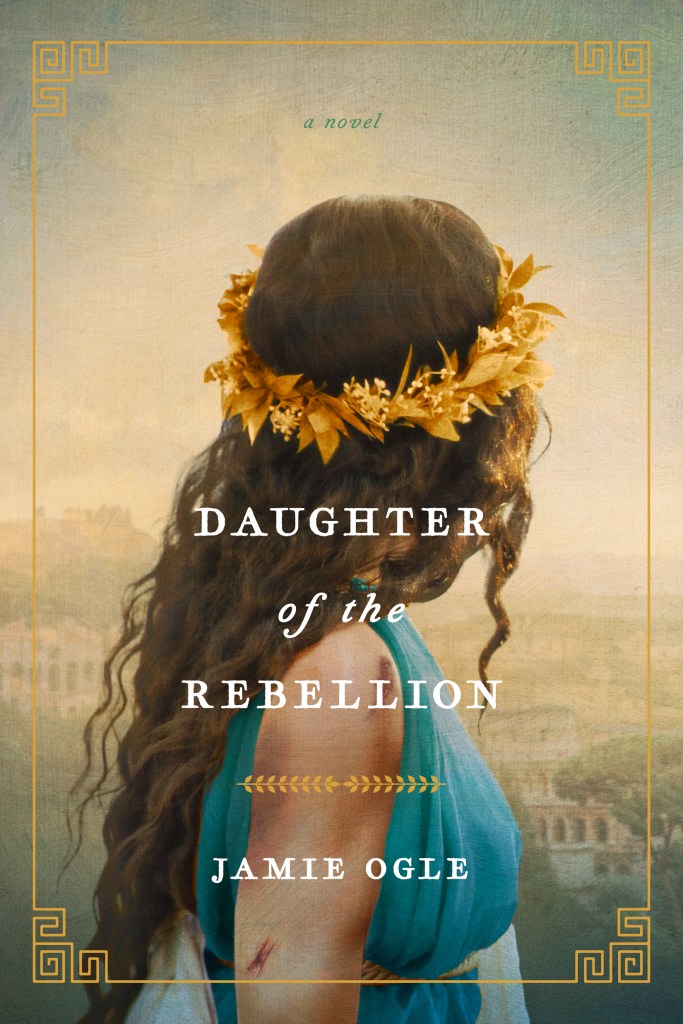
Can we talk about that cover? So beautiful! It conveys the theme of the novel so well: historical, longing, beauty.

Historical fiction fans will enjoy this novel.

Reviewed by Cindy Thomson. I received a complimentary audiobook of the novel from NetGalley and the publisher. This review is my honest opinion.